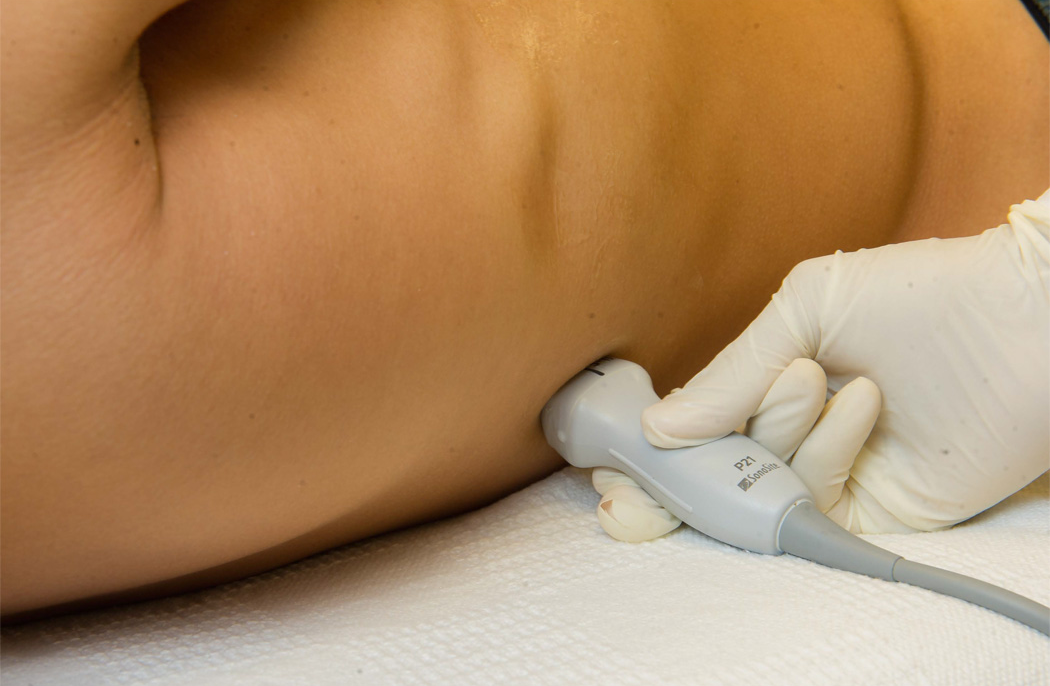
This study examined a critical but often underappreciated aspect of focused ultrasound delivery using the BrainSonix BX Pulsar 1002: the skin–transducer interface. Rather than focusing exclusively on intracranial effects, the authors evaluated temperature changes and tissue responses at the point of contact during ultrasound exposure, using living tissue models to simulate clinically relevant delivery conditions.
The results demonstrated that coupling quality, contact pressure, and interface design significantly influenced local thermal behavior and tolerability. These findings underscored that safe neuromodulation depended not only on intracranial acoustic parameters but also on careful management of surface-level delivery conditions. Furthermore, the study demonstrated the thermal safety of the BX Pulsar 1002 at intensities up to ISPTA.3 = 14 W/cm2. The study directly informed transducer design, coupling protocols, and operator guidance incorporated into the BX Pulsar 1002, supporting safer repeated-session use and improved patient comfort across clinical settings.