
The Need for Better Neuromodulation
Why do we need a new approach like LIFUP for brain disorders? Consider the following:
Many disorders remain treatment-resistant.
A significant subset of neurological and psychiatric illnesses do not respond adequately to current treatments. For instance, between 40%–60% of patients may not achieve full relief from standard medications for depression, epilepsy, and other conditions– and many who do improve suffer side effects. Neuromodulation offers a ray of hope for these patients by directly altering brain activity in ways drugs cannot. When medication or talk therapy fails, techniques like focused ultrasound could provide a new pathway to relief.
Traditional neuromodulation has critical limitations.
Existing brain stimulation methods each have drawbacks. Deep Brain Stimulation (DBS) involves surgical implantation of electrodes in the brain – it can effectively target deep areas but at the cost of an invasive brain surgery. On the other hand, non-invasive methods like transcranial magnetic or electrical stimulation (TMS/tDCS) are safer but only reach superficial brain layers and broadly stimulate large areas. In contrast, low-intensity focused ultrasound can reach deep into the brain without any incisions, and it can precisely focus on a small target (on the order of millimeters). It combines the best of both worlds – the focus of DBS with the non-invasiveness of TMS – overcoming the depth and precision limitations of prior technologies. This paradigm shift enables us to treat circuit abnormalities that were previously inaccessible by non-invasive means.
The global burden of brain disorders is rising.
Neurological and mental health conditions are among the leading causes of disability worldwide, and their prevalence is increasing as populations age and stressors grow. Millions suffer from Alzheimer’s, Parkinson’s, chronic depression, PTSD, chronic pain and more – posing a huge personal and societal challenge. There is an urgent need for novel, effective treatments that can be delivered safely and cost-effectively. Non-invasive neuromodulation with techniques like LIFUP could dramatically expand access to care, since it can be administered outpatient without anesthesia or hospital stays. If proven effective, it offers a scalable way to improve quality of life for large patient populations, reducing reliance on medications (and their side effects) and potentially slowing disease progression in neurodegenerative illnesses.
Advancing research and therapy development.
Beyond patient treatment, improved neuromodulation tools are crucial for research and innovation. The brain is extraordinarily complex, and understanding it requires tools to perturb and measure its activity. LIFUP provides researchers a unique capability: to temporarily and safely turn on or off specific brain regions and observe the results. This helps in mapping brain circuits (e.g. identifying which region causes a certain symptom or behavior) and in testing new therapies (by targeting a circuit to see if a drug’s effect is enhanced, for example). The knowledge gained can lead to breakthroughs in how we understand brain diseases and how we design interventions. In short, a technology like ours not only serves as a treatment, but also as a catalyst for discovery – accelerating the development of the next generation of neurotherapeutics and personalized medicine approaches.
Technology – How LIFUP Works
A Brief History of Focused Ultrasound Neuromodulation
Using ultrasound to modulate neural activity has a surprisingly long history. The first scientific reports of ultrasound’s effects on the nervous system date back to the 1950s. In 1958, Fry and colleagues demonstrated that focused ultrasound could reversibly suppress neural activity in animal brains – in their classic study, ultrasound aimed at the cat brain transiently altered evoked electrical responses, indicating a reversible silencing of neural circuits. (At higher settings, they noted, ultrasound could also produce permanent lesions, showing both reversible and irreversible effects were possible.) These early findings hinted at the potential of acoustically altering brain function, but the idea remained relatively niche for decades. Ultrasound technology at the time was crude, and interest gravitated more toward using high-intensity ultrasound to ablate tissues (e.g. for tumors or surgical lesions). Indeed, High-Intensity Focused Ultrasound (HIFU) emerged as a clinical tool to create precise lesions (it’s now FDA-approved to destroy tissue in conditions like essential tremor by thermally ablating a tiny spot in the brain). The neuromodulatory (low-intensity) use of ultrasound, however, saw a revival starting in the 2010s. Advances in transducer design, imaging guidance, and a better understanding of ultrasound bioeffects led researchers to revisit low-intensity ultrasound for functional brain modulation rather than destruction. Systematic efforts to explore LIFU in humans only began in earnest over the last decades. Pioneering studies – including those by our team at UCLA – showed that pulsed ultrasound at safe intensities can indeed influence brain activity and behavior without causing damage. For example, Dr. Bystritsky and collaborators published evidence that low-intensity focused ultrasound can alter brain circuit dynamics in both animals and humans in a reversible manner. This body of work laid the foundation for BrainSonix’s LIFUP platform, taking ultrasound neuromodulation from an experimental concept to a developing therapy.


How LIFUP Works & Key Parameters
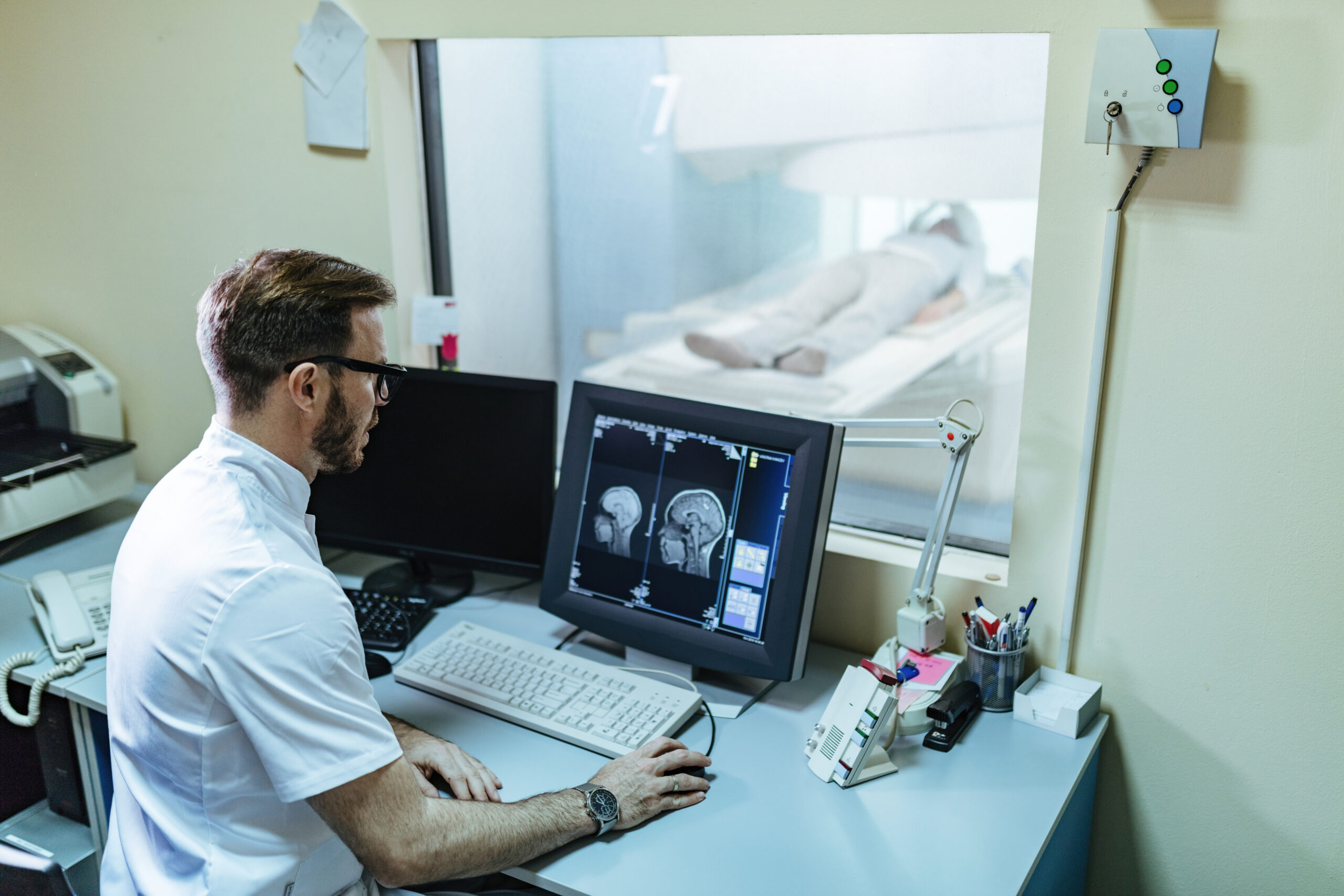
Focused ultrasound neuromodulation uses sound energy (pressure waves) in the ultrasound frequency range to perturb neural tissue. The BrainSonix LIFUP system operates in the hundreds of kilohertz range – our transducers, for instance, emit ultrasound at a fundamental frequency of about 650 kHz. At this frequency, ultrasound can penetrate the human skull (which blocks very high-frequency sound) yet still be focused to a small point. The transducer is shaped like a bowl (spherical curvature) so that it concentrates the ultrasound waves into a focal zone within the brain, roughly a few millimeters in diameter. This creates a tiny sphere of acoustic energy at the target – as one journalist described, our device “creates a small sphere of acoustic energy that can be aimed at different regions of the brain”. By adjusting the transducer’s position and angle, we can aim this focus at a specific brain structure of interest. Critically, LIFUP uses low intensities and pulsed delivery, distinguishing it from the continuous high-intensity waves used in ablation. The ultrasound intensity in our system is on the order of hundreds of mW/cm² (spatial peak temporal average) – an order of magnitude lower than that used in HIFU procedures. Moreover, instead of delivering a continuous beam, we deliver ultrasound in short bursts or pulses. A typical stimulation might involve a train of ultrasound pulses lasting a few hundred milliseconds or seconds, followed by a rest period. Key parameters include the pulse width (PW) – the duration of each ultrasound burst (e.g. a few milliseconds) – and the pulse repetition frequency (PRF) – how frequently pulses are emitted (e.g. tens or hundreds of pulses per second). We also define the overall duty cycle (what fraction of time the ultrasound is on vs off) and the total sonication duration (e.g. 30 seconds of pulsing, repeated in several sessions). By controlling these variables (frequency, intensity, PW, PRF, duty cycle, duration), we can tune the neuromodulatory effect. Certain settings may induce a net excitatory effect on neurons (potentiating their firing), while others produce inhibition or suppression of activity. For example, studies have shown that longer pulse trains at specific frequencies can excite neural circuits, whereas shorter, intermittent pulses might dampen neural activity – the exact outcome can depend on the brain region and parameters used.
The mechanisms by which ultrasound influences neurons are an active area of research. Unlike electrical stimulation, ultrasound does not directly inject current; instead, it exerts mechanical pressure on tissues. This can lead to effects like the opening of mechanosensitive ion channels on neuron membranes, or modulation of synaptic activity, or even affecting neurotransmitter release. Ultrasound’s pressure waves cause microscopic vibrations and displacements in cells and extracellular fluid. One hypothesis is that these vibrations alter the excitability of neurons by changing membrane tension or influencing proteins that respond to mechanical force. There is also evidence that ultrasound can impact blood–brain barrier permeability and blood flow, though at the low intensities of LIFUP, the primary effect is neuromodulatory rather than gross vascular change. Importantly, because our intensities are kept low and pulsed, thermal effects are minimal – the brain tissue does not heat up significantly (temperature rises are typically fractions of a degree). Thus, the changes in neural activity are thought to be due to mechanical perturbation rather than heating. This non-thermal mode of action is what allows the effects to be reversible. Neurons resume their normal activity shortly after ultrasound stops, and no lasting tissue damage occurs when used within safety limits.
Safety is a paramount concern that has been rigorously evaluated. Low-intensity FUS has now been tested in both animals and humans, and so far it has shown a strong safety profile. Adverse effects are rare and generally minor (for example, some patients might feel a slight tingling on the scalp or hear a faint sound during sonication, due to bone conduction of the acoustic wave). Unlike invasive stimulators, there’s no risk of infection or bleeding, and unlike medications, there’s no systemic side effect. The U.S. FDA has not yet approved LIFUP for general clinical use (as of 2025), but BrainSonix’s device is being used under FDA Investigational Device Exemptions in multiple clinical trials. The system has received multiple IDE approvals and “non-significant risk” designations from the FDA and local IRBs for research in various indications and it is designed to meet international safety standards (IEC 60601 for medical electrical equipment, etc.). All our devices undergo extensive testing to ensure they operate within safe acoustic output limits. For added assurance, we incorporate real-time monitoring – if a user attempted to exceed safe intensity or duty cycle parameters, the system’s software would automatically prevent it, ensuring patient safety at all times.